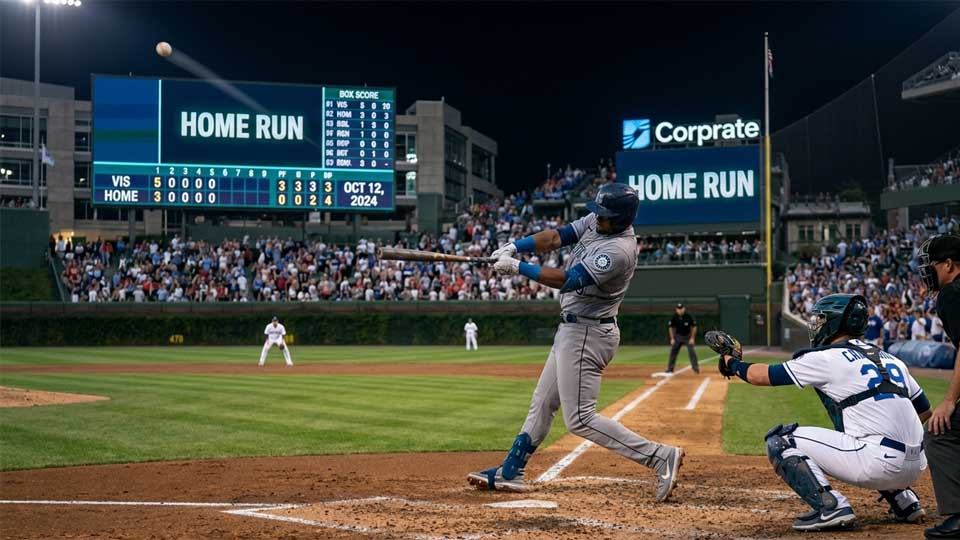
Home Run Props: Isolating Power Hitters with Excellent Ratings with Favorable Park Factors
Home run props are the high-stakes, high-reward corner of MLB player prop betting, and they're also where the TriSync system creates its most dramatic edge. When you can identify a power hitter operating in an Excellent TriSync window and place him in a ballpark that rewards elevated fly balls, you're not just hoping for a homer. You're stacking multiple layers of advantage that the sportsbooks don't fully account for.
But isolating HR prop value requires understanding something most bettors miss entirely: the TriSync system doesn't just measure whether cycles are high. It measures whether cycles are in the positions where each individual player produces his best results. About 50% of power hitters generate their biggest exit velocities and longest fly balls during traditional cycle peaks. But roughly 20% are contrarian performers, hitters whose power actually surges when one or more cycles sit in valley positions. The Composite score has already made this adjustment, so an Excellent rating means the same thing for every player: conditions are optimal for peak output, regardless of the path that gets them there.
This guide covers how to combine Composite scores with park factors at places like Coors Field and Great American Ball Park, how weather conditions amplify (or kill) home run probability, and when to bet the HR prop versus pivoting to the smarter play on total bases.
The TriSync Excellent Rating and Power Output
In the TriSync system, an Excellent rating, a composite rating of 5.55+, represents the rarest and most potent alignment of a player's three performance cycles in their individually optimal positions. For a power hitter, this convergence creates conditions uniquely suited to driving the ball out of the park.
Here's how each cycle contributes to home run production:
Capacity at its optimal level is the most direct driver of power. For traditional peak performers (the majority), this means Capacity running high, maximum bat speed, maximum rotational force through the hips and core, maximum exit velocity off the barrel. The difference between a 108 mph line drive that a center fielder runs down and a 112 mph fly ball that clears the wall often comes down to a few percentage points of physical output.
For contrarian Capacity performers, however, the picture is more nuanced. Some power hitters actually generate their best launch angles and hardest contact when Capacity sits lower, perhaps because reduced physical intensity produces a smoother swing path, better timing, or more efficient energy transfer. These hitters have been identified by the TriSync system and their ratings reflect this. When you see a contrarian Capacity hitter carrying an Excellent composite, his raw Capacity number might look low on a chart, but the system has recognized that this is exactly where he does his most damage.
Competitiveness at its optimal level might seem less relevant to raw power, but it's critical for home run production. Hitters in a favorable Competitiveness window are more willing to sit on a pitch and wait for their moment. They don't chase the slider away. They don't expand the zone when they fall behind. They wait for the fastball in the zone; the pitch they can drive, and when they get it, they don't miss. Home runs come from conviction, and Competitiveness fuels conviction. Whether that conviction peaks when the cycle is high or low depends on the individual player, and the TriSync system knows which.
Cognitive at its optimal level allows a hitter to identify pitch type and location earlier in its trajectory, which means the hitter can commit to his power swing sooner and with more confidence. A hitter whose Cognitive cycle is in a Suboptimal position might recognize a hanging curveball a fraction of a second late and roll it over for a groundout. That same hitter with Cognitive in his sweet spot identifies the spin immediately, loads early, and launches it into the seats.
When all three cycles converge into Excellent territory, resulting in a Composite score of 5.55+, you get a hitter whose physical output, competitive drive, and cognitive processing are all operating in their individual sweet spots simultaneously. That's the formula for a home run, and the TriSync system tells you when that formula is active before the first pitch is thrown.
Profile Types and HR Prop Reliability
The profile classification system, Aligned, Developing, and Variable, becomes even more important for HR props than for hits props. Here's why: home runs are lower-probability events than multi-hit games. When you're betting on something that happens in roughly 4-6% of plate appearances even for elite power hitters, you need the highest-confidence signal you can get. Profile type is that confidence filter.
Aligned power hitters are your primary HR prop targets. These are players whose performance tracks tightly and reliably with their TriSync cycle positions. When an Aligned hitter carries an Excellent rating of 5.55+, that rating is backed by a strong historical pattern of elevated power production in similar cycle windows. Equally important, when an Aligned hitter's rating drops to Suboptimal levels, his power genuinely diminishes, which means you can confidently fade him as well.
The reliability of Aligned profiles works in both directions: you know when to bet them and when to avoid them. This dual-direction predictability is what makes Aligned hitters the backbone of any serious HR prop strategy.
Developing power hitters carry more uncertainty. Their cycle-performance relationship is still emerging, which means their Excellent ratings might not translate to the same degree of elevated HR probability. You can include Developing profile hitters in your HR prop analysis, but only when every other variable, park factor, weather, opposing pitcher, is strongly in their favor. They need external support to compensate for the signal uncertainty.
Variable power hitters are the most dangerous group for HR prop betting. Their performance doesn't track consistently with cycle positions, which means an Excellent rating provides limited predictive value for a specific high-variance outcome like a home run.
The rule for HR props: Restrict your Tier 1 and Tier 2 HR wagers to Aligned profiles. Developing profiles can qualify for Tier 3 only with elite supporting conditions. Variable profiles should be excluded from HR prop betting entirely; the variance is too high and the signal too unreliable.
Park Factors: Where Home Runs Go to Thrive
Even a perfectly timed TriSync peak doesn't exist in a vacuum. Ballpark dimensions, altitude, and environmental conditions play a massive role in whether a well-struck ball ends up as a warning track fly out or a no-doubter. When building HR prop plays, park factor is the second variable you stack alongside the Composite score.
Coors Field (Colorado Rockies)
Coors Field is the undisputed king of hitter-friendly environments, and it's not even close. The park sits at 5,280 feet above sea level, where the thinner air reduces drag on batted balls by roughly 5-9% compared to sea-level parks. In practical terms, a ball that travels 395 feet at Dodger Stadium might carry 415 feet at Coors. Warning track fly outs become home runs. Home runs become upper deck shots.
But altitude is only part of the story. Coors also features spacious dimensions that allow balls to carry in the gaps, and the dry Colorado air affects pitch movement, breaking balls don't break as sharply, fastballs don't have as much late life. This means hitters face flatter, more hittable pitches, which compounds the altitude advantage.
The TriSync angle at Coors: When a power hitter, especially an Aligned profile, carrying an Excellent rating of 5.55+ plays at Coors, every ball he drives in the air has a higher probability of leaving the yard. The park essentially lowers the threshold for how well a ball needs to be struck to go out. A hitter who needs to generate 108 mph exit velocity at a sea-level park might only need 103-104 at Coors. When that same hitter's cycles are positioned for his personal best power output, the extra exit velocity at altitude turns into moonshots. And because the TriSync system has already calibrated his rating to his individual performance pattern, whether he's a traditional or contrarian performer, you can trust that the Excellent tag genuinely reflects elevated power conditions.
Great American Ball Park (Cincinnati Reds)
Great American Ball Park is often overlooked in favor of Coors when discussing hitter-friendly parks, but it's arguably the most undervalued HR environment in baseball for props bettors. The park sits along the Ohio River at a modest elevation but features relatively short dimensions down both lines (328 feet to left, 325 feet to right) and a power alley in right-center that plays shorter than its listed distance suggests.
More importantly, wind patterns along the river frequently push air currents out toward center and right field during summer evening games. When the wind is blowing out at Great American, balls that are pulled to the right side carry exceptionally well.
The TriSync angle at GABP: Left-handed power hitters and right-handed pull hitters with Excellent Composite scores and Aligned profiles are especially dangerous here. The combination of short porches, favorable wind patterns, and a hitter operating at his individually-calibrated peak creates some of the highest-probability HR prop scenarios in baseball. Watch for games where the evening forecast shows winds blowing to right-center at 8+ mph; those are nights where the park plays even smaller than usual.
Other Parks Worth Monitoring
While Coors and Great American are the premier targets, several other parks consistently play as home run-friendly and deserve attention when high-rated TriSync-rated hitters visit:
Yankee Stadium features a notoriously short right-field porch (314 feet) that left-handed hitters exploit relentlessly. A lefty power bat with an Aligned profile and an 8.00+ Composite score in Yankee Stadium is always worth a look.
Globe Life Field in Arlington, despite being a retractable-roof stadium, plays as slightly hitter-friendly and the climate control means weather is never a negative factor. The ball carries well to center and right-center.
Citizens Bank Park in Philadelphia has compact dimensions and a consistent history as a top-10 home run park. Right-handed hitters with power to the pull side benefit most.
Wrigley Field becomes one of the best HR parks in baseball when the wind blows out from the southwest; a condition that occurs most frequently in summer afternoon games. When the wind is blowing in, however, it becomes a pitcher's park. Always check the forecast before building Wrigley HR plays.
Weather Conditions and Rating Alignment
Weather is the often-ignored multiplier in home run prop analysis. Temperature, wind speed, wind direction, and humidity all affect how far a baseball travels, and when you're already stacking a TriSync Excellent rating with a favorable park, weather alignment becomes the third layer that separates a good play from a great one.
Temperature
Warmer air is less dense than cold air, which means balls carry farther in higher temperatures. The effect is measurable: studies have shown that a ball travels roughly 2.5 feet farther for every 10-degree increase in temperature. On a 95-degree July night at Great American Ball Park, a fly ball travels meaningfully farther than on a 65-degree April evening.
Rule of thumb: For HR props, target games where the first-pitch temperature is 75°F or above. Games above 85°F get a further boost. Early-season games below 60°F should be approached with extreme caution on HR props, even with elite Composite scores, though an Aligned hitter at Excellent in a cold-weather game at Coors may still warrant consideration given the altitude advantage.
Wind
Wind is the most volatile weather factor and the one most capable of turning a strong play into a must-bet or a fade. The critical variables are direction and speed.
Wind blowing out (toward the outfield) at 8+ mph is the strongest weather positive for HR props. It adds real distance to fly balls and can turn warning track shots into home runs. At parks like Wrigley, an outbound wind can increase HR probability by 20-30% compared to calm conditions.
Wind blowing in (toward home plate) at 8+ mph is a deal-breaker. Even an Aligned Excellent TriSync-rated hitter at Coors can see his HR probability meaningfully reduced when he's hitting into a stiff headwind. Avoid HR props in these conditions unless the rating is truly exceptional (7.25+) and the park factor is extreme (Coors).
Crosswinds are more nuanced. A crosswind blowing from left to right benefits right-handed pull hitters (whose fly balls curve toward the wind-assisted side) and works against left-handed pull hitters. Reverse for winds blowing right to left. Always consider the batter's pull side relative to the crosswind direction.
Humidity
Higher humidity means the air contains more water vapor, and water vapor is actually lighter than the nitrogen and oxygen it displaces. Counter to common intuition, humid air is slightly less dense than dry air, meaning balls carry marginally farther in humid conditions. The effect is smaller than temperature or wind, but it's another positive factor worth noting.
The complete weather stack for HR props: The ideal conditions are temperatures above 80°F, wind blowing out at 8-15 mph, and moderate to high humidity — combined with an Aligned hitter carrying a TriSync Excellent rating at a hitter-friendly park. When all four factors align, you have a play that deserves premium bet sizing.
HR Props vs. Total Bases: Making the Right Call
One of the most important strategic decisions in power-hitting prop analysis is knowing when to bet the home run prop versus pivoting to the Over on total bases. Both markets reward power production, but they have very different risk-reward profiles, and the TriSync system, particularly the profile classification, helps you choose between them.
When to Bet the HR Prop
The HR prop is the right play when conditions create a genuine probability spike for a homer, not just good production generally. Bet the HR prop when:
The TriSync composite is 5.55 or above AND the hitter carries an Aligned profile. This is the combination where the Excellent rating is most reliably predictive of peak power output. You can trust that the rating reflects genuine conditions for a performance spike, not noise. Without the Aligned profile, even a 5.55+ rating doesn't carry enough certainty for the low-probability HR bet.
Park factor and weather are both strongly positive. Coors with wind blowing out. Great American Ball Park on a 90-degree night. Yankee Stadium for a lefty pull hitter with a breeze to right. You need the environment working in tandem with the rating.
The opposing pitcher has a Composite score below 3.50 AND a flyball tendency. A pitcher in a low Composite score window who also tends to leave pitches up in the zone (high fly ball rate allowed, elevated barrel rate against) creates the pitch location conditions that power hitters need to launch home runs. An Aligned pitcher with a sub-3.50 rating is particularly exploitable because his performance is as predictable as your hitter's peak. A low-rated pitcher who still keeps the ball down is less exploitable for HR specifically, even if he's hittable in general.
The hitter's individual Capacity score is in its optimal range. Since Capacity is the cycle most directly linked to raw power output, pay attention to where it sits relative to the player's known optimal zone. For traditional performers, that means Capacity running high. For contrarian Capacity hitters, it means Capacity in the valley range where they historically generate their hardest contact. The composite Composite score already reflects this, but checking the Capacity component adds a layer of confidence.
When to Bet Total Bases Instead
A total bases prop is the safer, higher-probability play that still captures upside from power output without requiring a home run to cash. Pivot to total bases Over when:
The Composite score is strong but not elite (5.55-6.00). At these levels, the hitter is positioned for solid multi-hit production and extra-base hits, but the probability of a specific home run isn't elevated enough to justify the HR prop's longer odds. Total bases Over (usually set at 1.5 or 2.5) captures the value of doubles and multi-hit games that are more likely than a homer.
The hitter carries a Developing or Variable profile. Even at Excellent Composite scores of 5.55+, Developing and Variable profile hitters don't give you the confidence needed for the HR-specific bet. But their elevated cycle positions still suggest above-average production generally, which total bases captures more reliably. This is where you extract value from Developing profiles in the power market without needing the precision that HR props demand.
Park factor is positive but not extreme. Games at Citizens Bank Park, Globe Life Field, or other moderately hitter-friendly venues where the ball carries well but there's no altitude or wind boost pushing fly balls over the wall. These environments favor extra-base production broadly rather than home runs specifically.
Weather is neutral or mixed. Temperature above 75°F but wind is calm or crosswise. Conditions are good enough that a well-struck ball will carry, but there's no wind-out factor to turn long fly balls into home runs. In these spots, the hitter is more likely to produce doubles and hard singles than to go deep.
The pitcher is vulnerable but keeps the ball down. A low-rated pitcher who induces groundballs and sinkers isn't giving up the elevated pitches that turn into home runs. But if he's also in a TriSync valley, his groundball stuff may flatten out enough to become hittable, just more likely to produce line drives and doubles than fly ball homers.
The Decision Matrix
Think of it as a grid that now includes profile type:
Composite score 6.50+ Aligned with strong park and weather: HR prop — the highest-confidence combination justifies the longer odds.
Composite score 5.55-6.50 Aligned with elite park and weather: Consider both — a smaller HR prop stake alongside a standard Total Bases Over bet lets you win big if the homer lands while still profiting from a multi-hit, extra-base game.
Composite score 5.55+ Aligned but park or weather is negative: Total bases Over — the rating is elite and the profile is reliable but the environment is fighting you on the specific HR outcome.
Composite score 5.55+ any profile: Total bases Over — capture the elevated production without needing the specific outcome.
Composite score 5.55+ Developing with elite conditions: Total bases Over, small HR flyer optional — the profile isn't reliable enough for a confident HR play, but a small speculative stake is reasonable if conditions are stacked.
Composite score 5.55+, Variable profile: Total bases Over only — never bet HR props on Variable profiles.
Building Your HR/Total Bases Workflow
Here's how to integrate this into your daily process alongside the hits prop workflow:
Step 1: After identifying your hits prop plays using the 6.50+ vs. 3.50 framework, look at the hitters in your pool who have Composite scores above 6.50 and Aligned profiles. These are your HR and total bases candidates.
Step 2: Check park factors. Is any 6.50+ rated Aligned hitter playing at Coors, Great American, Yankee Stadium, or another top HR park?
Step 3: Check weather. Pull up the hourly forecast for the relevant city at game time. Look for temperature, wind speed, and wind direction specifically.
Step 4: Assess the pitcher matchup. Is the opposing starter below 3.50 with fly ball tendencies? Is he Aligned (making his poor rating more reliably exploitable)? If yes on both, this is an HR prop target. If the pitcher keeps the ball down even in a low Composite score window, or carries a Variable profile, lean total bases.
Step 5: Apply the decision matrix, factoring in profile type, and size your bet accordingly.
This entire process adds roughly five minutes to the hits prop workflow you're already running. For that small investment of time, you're accessing the highest-upside plays on the board with a systematic edge.
Bet Sizing for HR and Total Bases Props
Because HR props carry longer odds and lower hit rates than hits props, your bankroll approach needs to adjust accordingly.
HR props (Aligned profiles only): Bet 0.5-1.5 units maximum. Even elite TriSync plays at favorable parks have a home run probability in the range of 12-18% per game. At plus-money odds (+250 to +450 typical), you don't need a high hit rate to profit, but you need to survive extended losing streaks. Keep individual HR prop bets small, and treat your profits as coming from periodic large payouts rather than steady cash flow. The Aligned profile requirement ensures that when you do bet, the signal is as reliable as possible.
Total bases Over props: Bet 1-2 units, similar to your hits prop sizing. These lines typically price around -120 to +120, and the hit rate for well-selected TriSync plays should be meaningfully above the breakeven threshold. This is your steady-profit market, and it's where Developing profiles can contribute alongside Aligned ones.
Combo approach (HR + Total Bases on the same Aligned hitter): When conditions justify both, allocate 0.5-1 unit to the HR prop and 1-1.5 units to the total bases Over. Your total exposure stays manageable, and you're covered for the most likely positive outcome (multi-hit, extra-base game) while maintaining a shot at the big payout if the ball leaves the yard.
Daily HR/TB cap: Keep your total daily exposure to HR and total bases props at 5-6% of your bankroll. Combined with your hits prop action, your total daily prop exposure should not exceed 15% of your bankroll across all markets.
Key Takeaways
Home run props are where the TriSync Sports system for baseball produces its most exciting opportunities, but they're also where discipline and profile awareness matter most. The system for isolating power plays is straightforward: start with Excellent Composite score above 6.50, filter for Aligned profiles to ensure the rating is genuinely predictive, confirm favorable park factors at the handful of venues that boost HR probability, and verify weather alignment (warm temps, wind out). Then make the smart choice between the HR prop and total bases based on the full picture.
The parks that matter most are Coors Field and Great American Ball Park, but don't sleep on Yankee Stadium for lefty pull hitters, Globe Life for consistent offense, or Wrigley when the wind cooperates.
What separates TriSync Sports from simpler systems is the recognition that not every player peaks the same way. By identifying contrarian performers and adjusting ratings accordingly, and by classifying players as Aligned, Developing, or Variable, the system gives you a signal you can actually trust when putting real money on a low-probability, high-reward outcome like a home run.
Remember: the HR prop is a selective weapon, not your daily bread and butter. Your hits props running on the 6.50 vs. 3.50 framework are the engine that drives consistent profits. The HR and total bases plays are the turbo boost; used strategically, with profile-aware discipline, they can dramatically accelerate your season-long returns.
Stack the cycles. Stack the profiles. Stack the parks. Stack the weather. And let the math work in your favor.
Bet responsibly. Past performance of any analytical system does not guarantee future results. TriSync Sports is intended as an informational and entertainment tool.